
Three Units Said UH, One Said A5: How a Brand-New Daikin Mini Split Told Us Exactly What Its Installers Got Wrong
A four-zone system that passed its install test, froze itself solid a day later, and the built-in connection check that fixed crossed wiring without touching a single wire.
In this guide
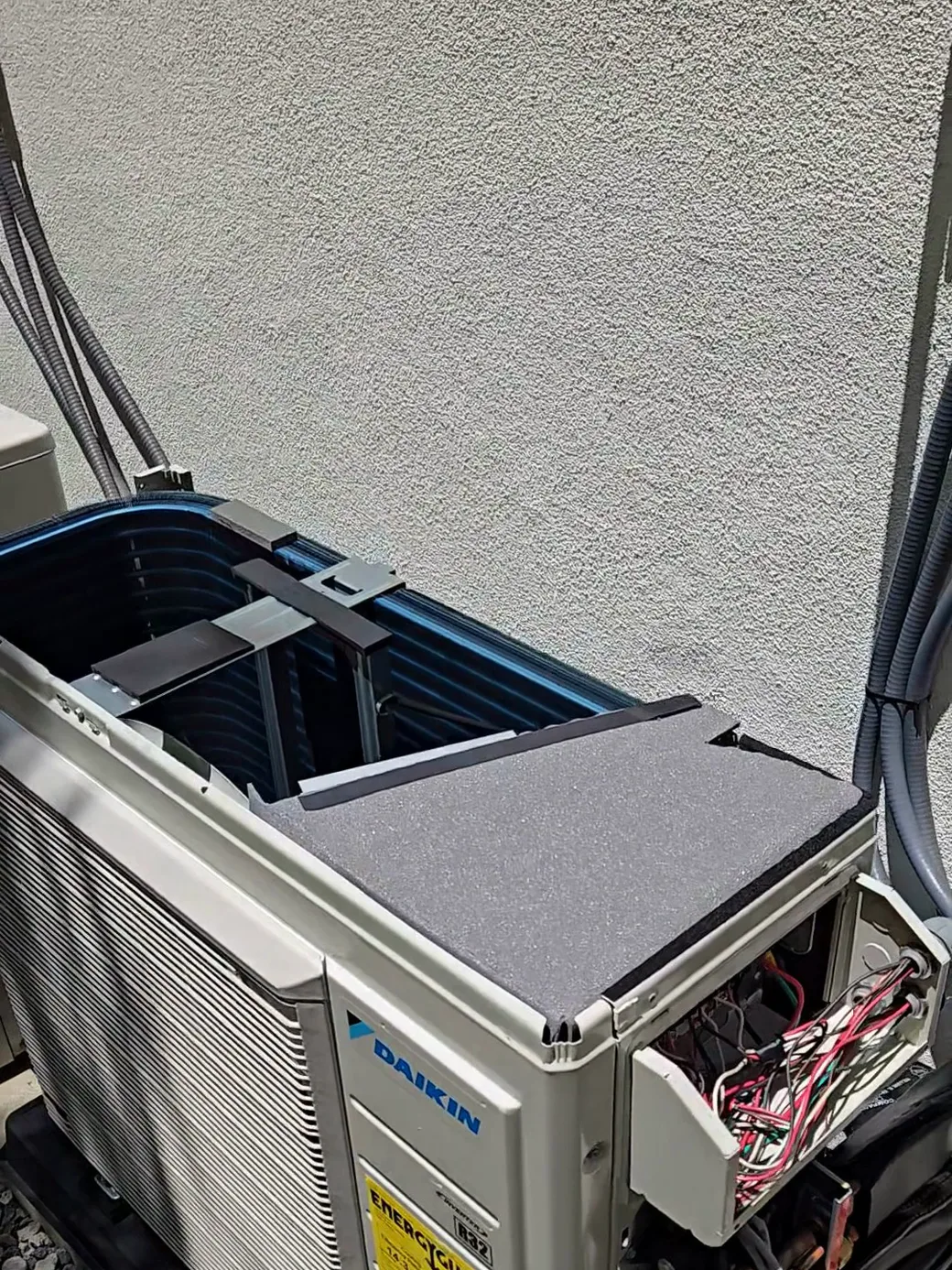
The call sounded like a warranty nightmare: a brand-new Daikin multi-zone mini split — one outdoor unit, four indoor heads — installed days earlier by another crew. They’d fired it up with all four zones running, everything blew cold, everyone shook hands, and they left. Then the homeowner did the most normal thing in the world: he turned on just one room. Errors on the indoor units, and the whole system locked itself out. (The short clip from this exact job is at the top of the page.)
Here’s how the system itself told us what went wrong, and why the fix didn’t involve touching a single wire.
Three units say UH. One says A5. That’s the whole story.
Modern mini splits keep receipts. Through the remote, you can put each indoor unit into its error-history mode — hold the right button, cycle through the stored codes — and hear the machine’s version of events.
We checked all four heads. Three of them had logged UH. The fourth logged something different: A5 — freeze protection.
When you’re staring at four faults, the instinct is to read each one like a separate problem. The real skill is noticing the pattern: three units complaining the same way, and one odd man out. Whatever happened, that fourth unit lived through something the other three didn’t. Find out why the outlier is the outlier, and you’ve usually found the fault.
What actually happened: right pipes, wrong wires
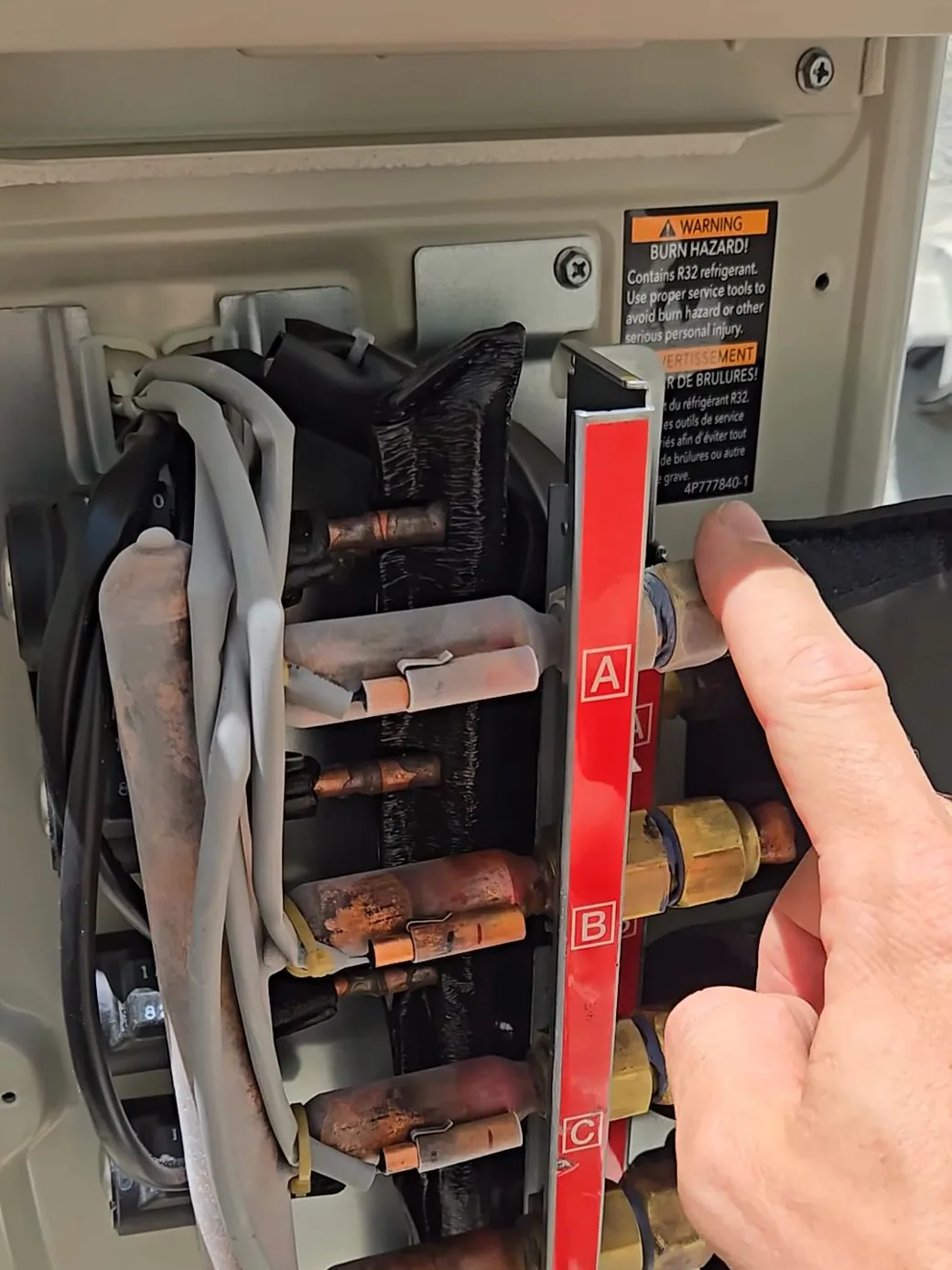
On a multi-zone system, every indoor unit needs two things run to it: a refrigerant line and control wiring. The install crew had connected the refrigerant lines in the correct order — line 1 to unit 1, line 2 to unit 2, and so on. The control wires, though, got crossed.
The result is a system that lies to itself. When the homeowner turned on one bedroom, the controls told the outdoor unit to send refrigerant down what it believed was that bedroom’s line. A command went to one unit — but a different one fired. Cold refrigerant went flowing through an indoor unit that was switched off.
And a switched-off unit has no fan. Nothing moves air across the coil, so the cold has nowhere to go. The coil gets colder, condensation frosts over, and the ice starts building — we could see the frosted line on that zone with our own eyes, while the unit above it sat dark. Its coil sensor watched the temperature dive and did exactly what it’s designed to do: threw A5, freeze protection, and the system locked out completely to protect the compressor.
That’s why the install test never caught it. With all four zones blasting at once, refrigerant flows everywhere and every coil has airflow — crossed pairs cover for each other. The fault only exists when zones run individually, which is how actual humans use their homes.
The fix: let the system re-wire itself
Fifteen years ago, this repair meant tracing four control cables through walls, or re-terminating wires at the outdoor unit until the mapping matched. Hours of work on a brand-new install.
Daikin’s engineers clearly got tired of that, because modern multi-zone systems ship with a connection check — a self-diagnosis mode, started from a service switch on the outdoor unit’s board. The system runs each refrigerant line one at a time, watches which indoor unit’s sensors react, and builds the true map of what’s actually connected to what. If the wiring is crossed, it doesn’t demand you fix it — it re-maps the assignments in software and carries on.
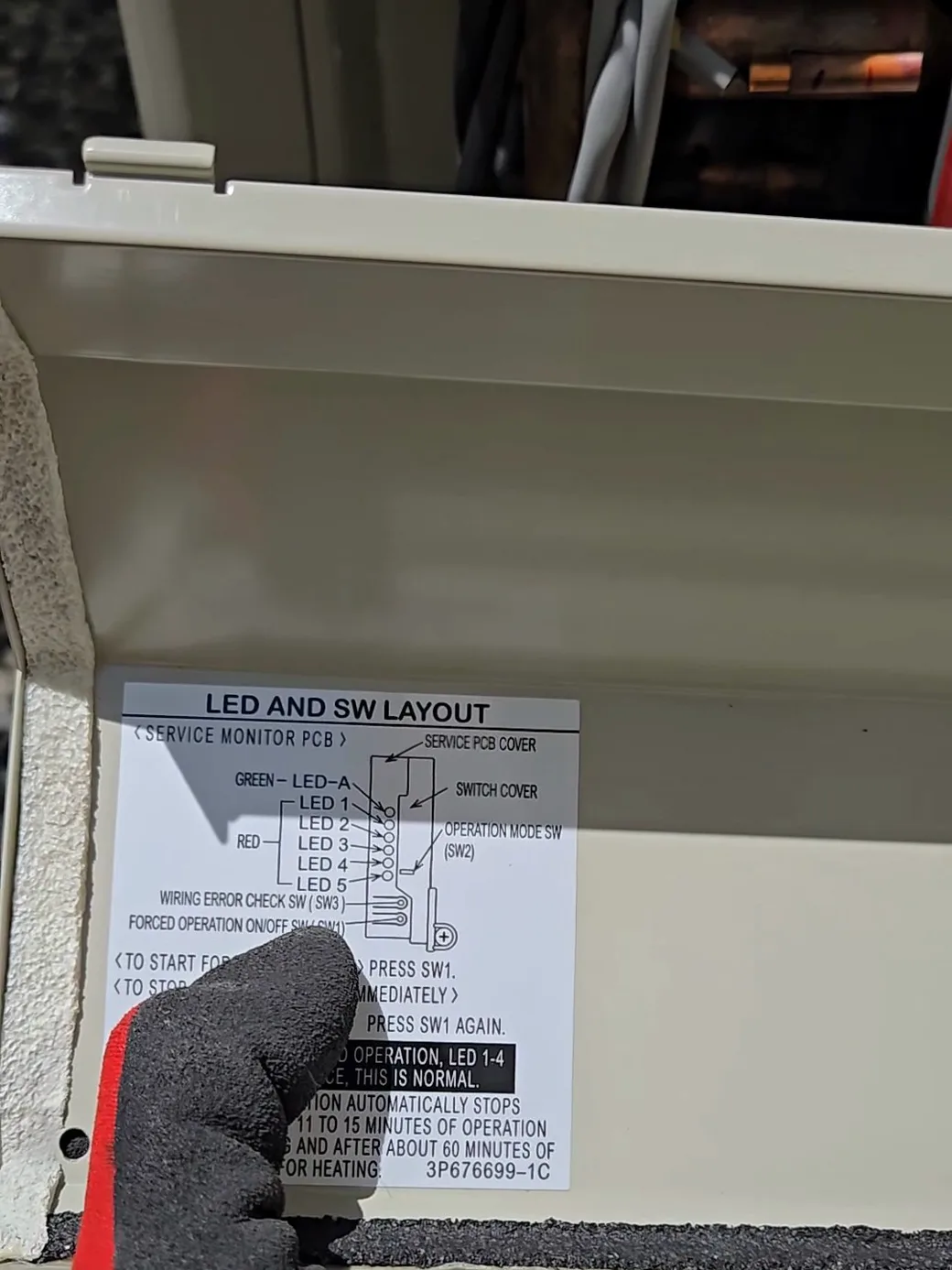
So that’s what we did: started the connection check, gave it its few minutes to think, and let the machine sort out its own installers. When it finished, we ran the real test — each zone individually, one at a time, with a thermometer at the vanes. Cold air from the right room, every time. The frosted zone thawed, the codes cleared, and the system has behaved since.
Minimum work, maximum precision — but only if you know the mode exists, where the switch hides, and how to read the codes that point you there in the first place.
The lesson for anyone buying a multi-zone system
The installers who crossed these wires weren’t incompetent — this is a genuinely easy mistake to make with four identical cables. Their real mistake was the test: running everything at once is exactly the one scenario where crossed wiring looks fine.
When your multi-zone install is finished, ask the crew to demonstrate each zone individually: one unit on, cold air confirmed at that unit, everything else quiet. Five minutes per zone. If they’d done that here, they’d have caught it before leaving the driveway.
And if your new system is already acting strange — faults when you run one room, a zone that ices up, a lockout that keeps coming back after resets — stop resetting it. The lockout is protecting the compressor. Get someone to read the codes instead; the system already knows what’s wrong. (If you’re weighing what a service call costs against living with it, our repair pricing guide breaks down how we quote — flat rate upfront, and the $85 service call is credited toward the repair.)
We do this diagnosis-first work on mini splits all over LA — it’s the same philosophy as the control board we repaired instead of replacing: test what the machine is telling you before you start replacing things it isn’t.
Registered CA BEAR #A 50636 · EPA Section 608 Universal certified · $1M insured · 1,266+ repairs completed. Serving the Westside and San Fernando Valley: West Hollywood, Beverly Hills, Santa Monica, Culver City, Sherman Oaks, Studio City and nearby. Mini split service and AC tune-ups are available by appointment.
Call or text (213) 205-2055.
FAQ
Why does my new mini split work with all zones on, but fail when I run one room?
That pattern is the classic signature of crossed connections. With every zone running, refrigerant is flowing everywhere and every coil has airflow, so nothing looks wrong — the crossed pairs cancel each other out. The moment you run a single zone, the system sends refrigerant down one line while the fan runs on a different unit, and the mismatch shows up as faults. If your installer only tested with everything on at once, this exact failure can hide until the first evening you cool just the bedroom.
What do Daikin UH and A5 error codes mean?
On the system in this story, three indoor units logged UH — the units couldn't make sense of what the system was doing — and one logged A5, which is freeze protection: the unit's coil sensor saw temperatures low enough to start icing. The precise definitions vary by model, but the diagnostic gold was the pattern: three units complaining the same way, one complaining differently. The odd one out was the unit that refrigerant was actually flowing through while it sat switched off with no fan.
Why would a switched-off indoor unit freeze?
Cold refrigerant only stays under control when air moves across the coil. A unit that's off has no fan, so if crossed wiring sends refrigerant through it anyway, the coil just gets colder and colder with nothing to absorb the cold. Condensation on it freezes, frost builds, and the coil sensor eventually trips freeze protection. We could see it directly on this job — the line on that zone was already frosted over while the room's thermostat showed the unit was off.
What is Daikin's connection-check (self-diagnosis) mode?
Modern Daikin multi-zone systems can test their own installation. From the outdoor unit's service board, you start a connection check — the system runs each refrigerant line one at a time, watches which indoor unit's sensors respond, and figures out which wire actually belongs to which line. If the wiring is crossed, it re-maps the assignments internally, in software. It takes some minutes to run, and at the end the crossed install works correctly without anyone touching a wire.
Do the crossed wires need to be physically fixed at some point?
No — once the system has re-mapped the connections, that mapping is how it operates. The refrigerant lines and wires stay exactly where the installers put them; the control board simply knows the true arrangement now. It's a permanent fix, not a workaround. The one thing we'd add: note the re-map on the unit for the next technician, so nobody 'corrects' the wiring back into a fault.
Did running crossed for a day damage the system?
In this case, no — and that's partly thanks to the A5 lockout doing its job. Freeze protection exists precisely to stop the compressor before an iced coil turns into liquid refrigerant slugging back to it. The system shut itself down, we corrected the mapping, the frost melted, and it's been running normally since. This is a good example of why you shouldn't keep resetting a system that keeps locking out: the lockout is protecting the expensive parts.
How should a multi-zone install be tested before the crew leaves?
Not just with everything on. A proper commissioning test runs each zone individually: turn on one unit, confirm that unit — and only that unit — gets cold, check the air temperature at the vanes, then move to the next. Five extra minutes per zone catches crossed connections on the spot. If you're getting a multi-zone system installed, it's a fair thing to ask your installer to demonstrate before they pack up.
Does Epic Star service mini splits in Los Angeles?
Yes — diagnosis, error codes, freeze-ups, post-installation problems, and regular service on Daikin and other mini split brands, across the Westside and San Fernando Valley. If a system is acting strange after an install, we'd rather read its codes than start pulling wires. Call or text (213) 205-2055.
AC, heater or mini-split acting up? We cover LA and the Valley.
Call (213) 205-2055 or text a photo of the unit and its model sticker.