
Mini-Split Cleaning & Maintenance in Los Angeles
Ductless AC cleaning for single-zone and multi-zone systems: blower wheel, evaporator coil, drain pan and line, and filters.
$85 service call credited toward the cleaning · Additional units discounted · 30-day labor warranty
Updated October 2026
Quick facts
| Service call | $85 — credited toward the cleaning if you go ahead |
|---|---|
| Warranty | 30-day labor |
| Credentials | BEAR #A 50636 · EPA Section 608 Universal |
| Hours | Mon–Fri 09:00–19:00 Sat–Sun 10:00–16:00 |
Coil and blower wheel washed in place
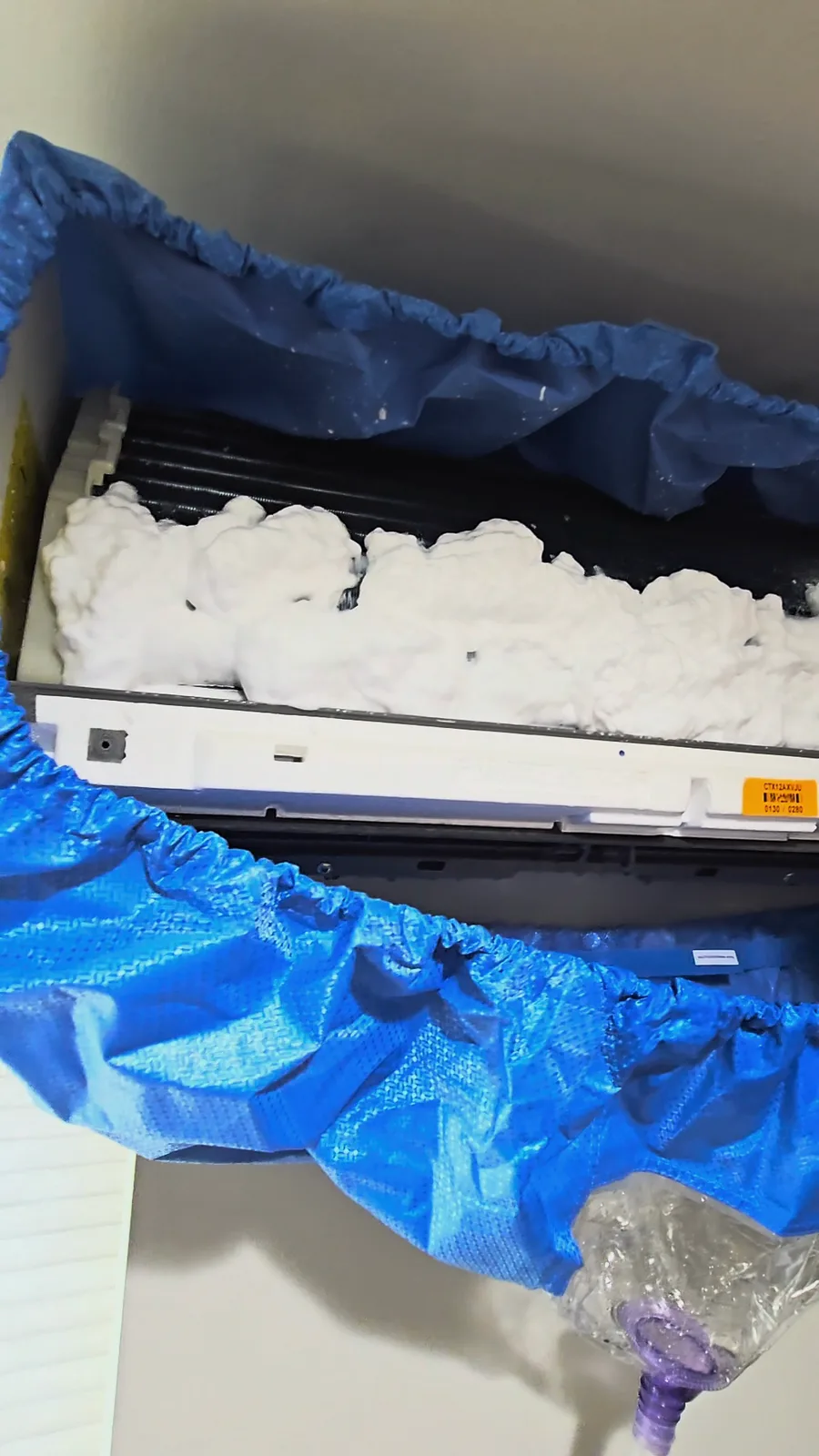
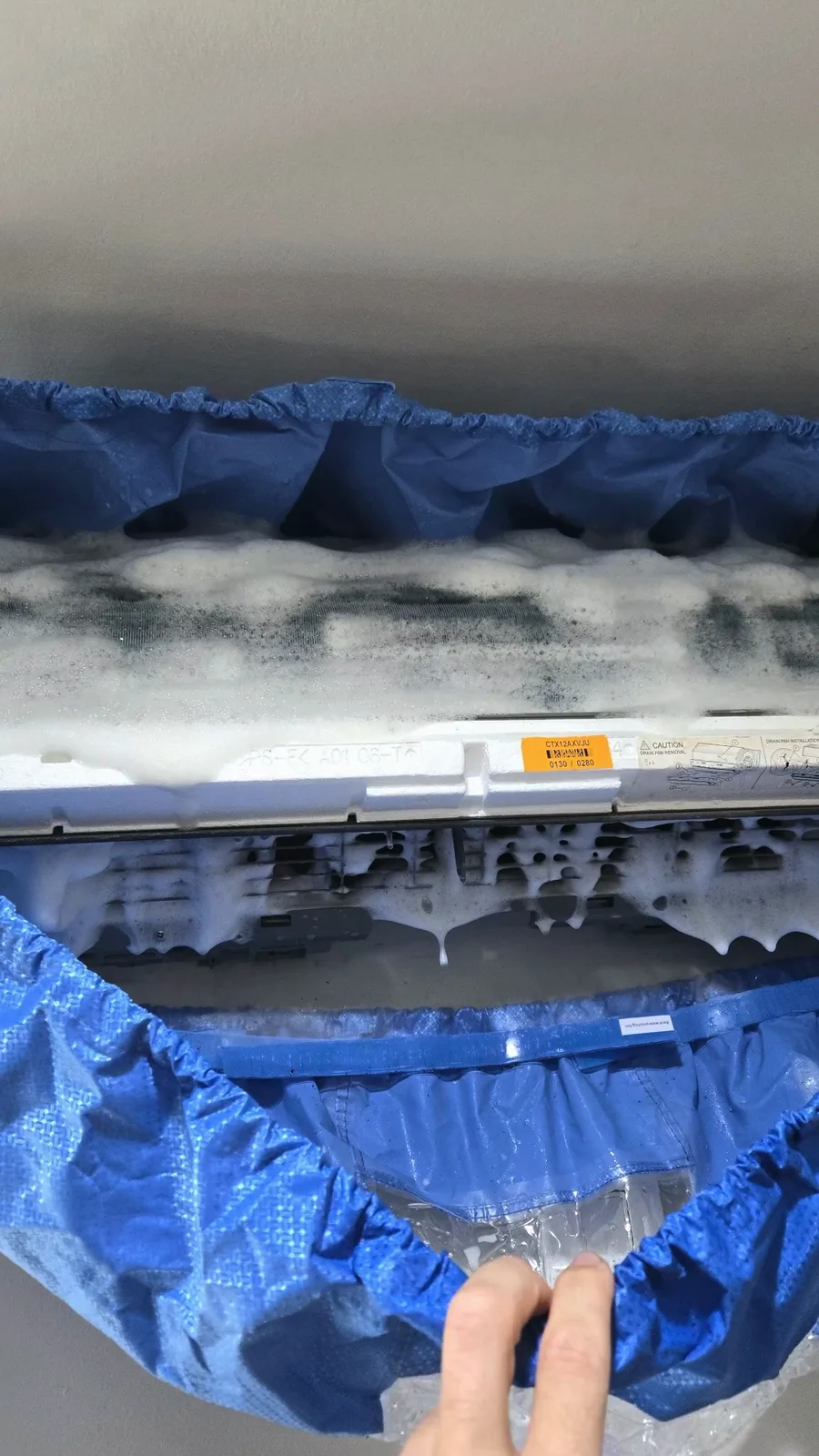
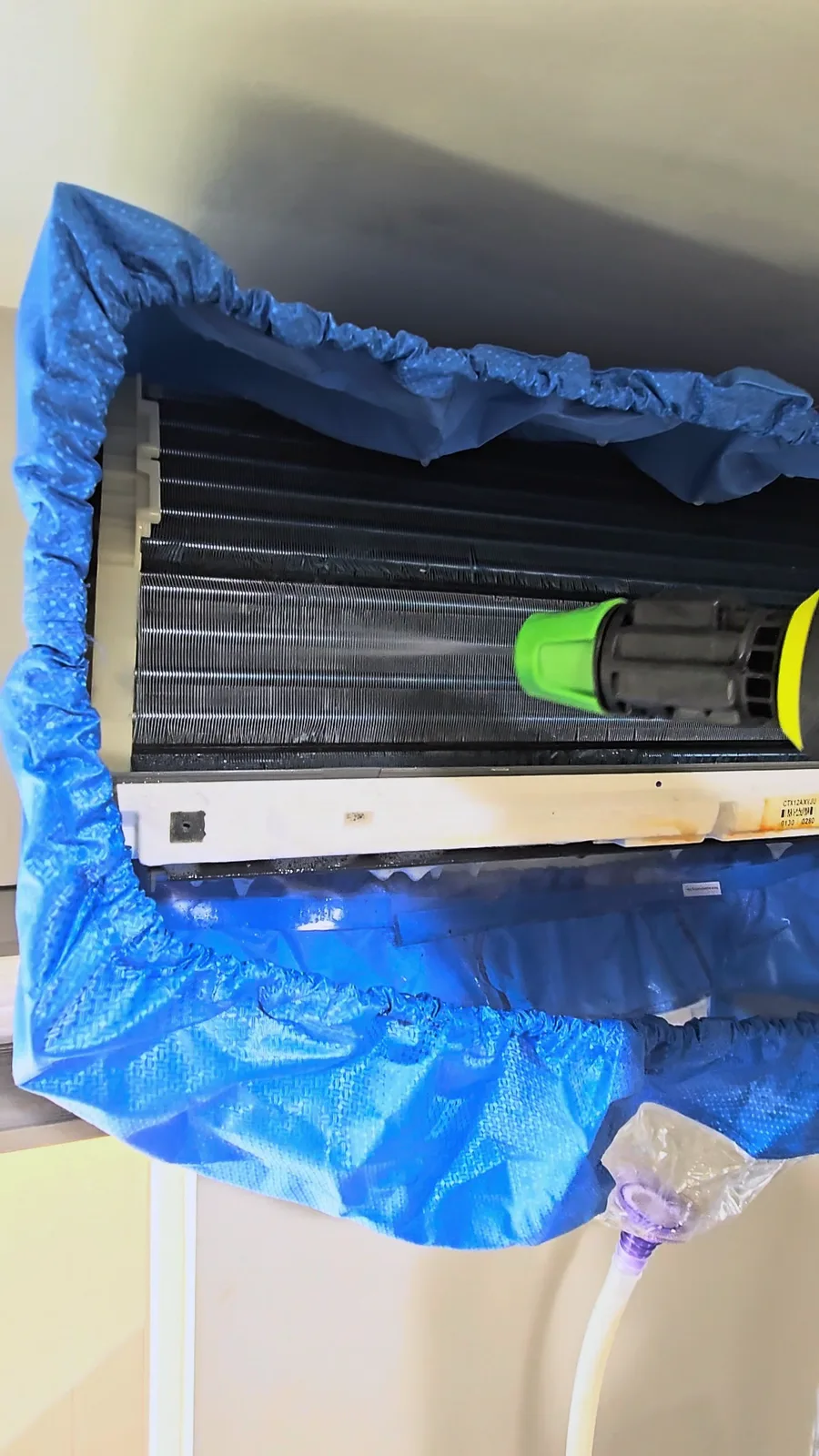
Foam on the coil, then a sprayer rinse through the coil and up into the blower wheel, with a cleaning bag catching the runoff.
Every head on one visit
On a multi-zone system each indoor head is cleaned separately, and additional heads on the same visit are discounted.
Drain checked before we leave
We flush the drain pan and condensate line and check that water actually leaves the head before we pack up.
Price before we start
Typically $150–$450 per indoor unit, with a discount on additional units. You get the full price before any work begins.
$85 service call, credited toward the cleaning
$85 fee credited toward the cleaning if you go ahead.
Bilingual EN/ES
Both languages spoken.
What a mini-split deep cleaning includes
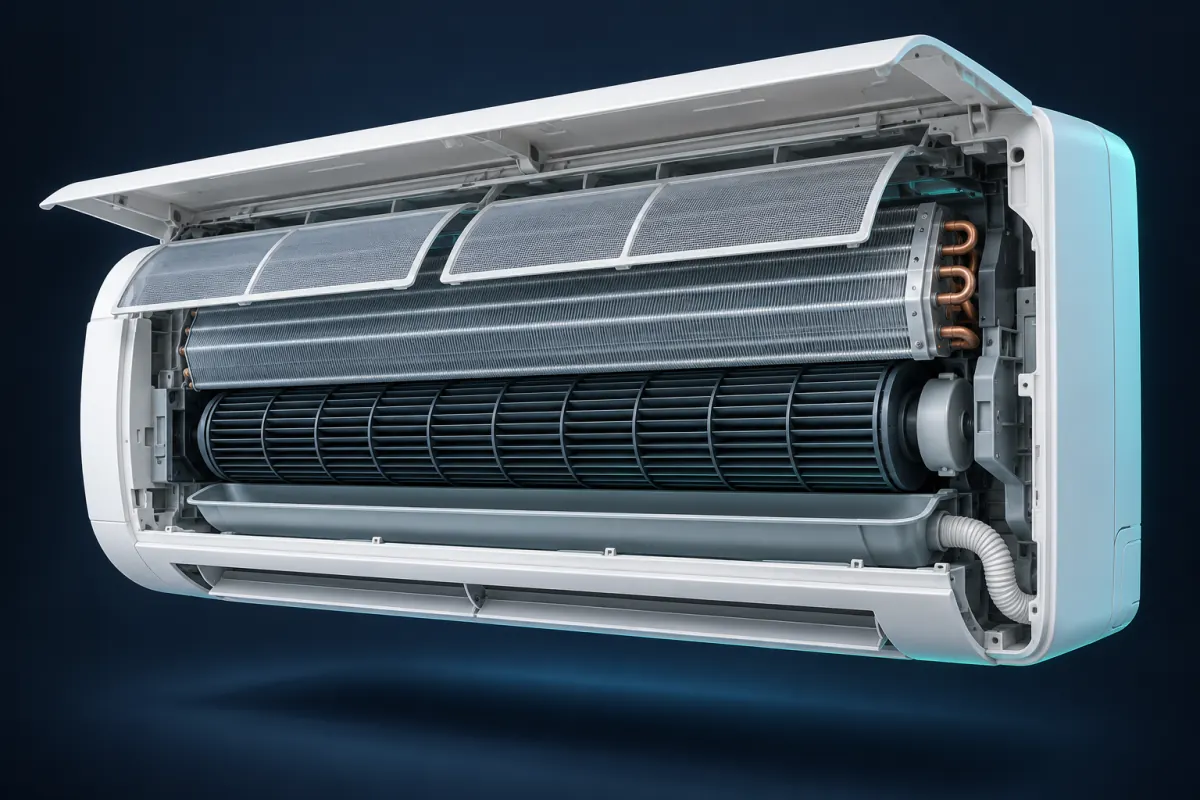
A wall-mounted head pulls room air through a mesh filter, across the evaporator coil, and out through a long blower wheel. The filter catches lint. Fine dust gets past it and settles on the coil and the wheel, and water from the coil collects in the drain pan underneath. A deep cleaning reaches all three, in place, in this order:
Power off
We shut the system off at the disconnect or breaker before opening anything.
Front panel off, first look
The front panel and filters come off, and we check the blower wheel and the drain pan.
Cleaning bag
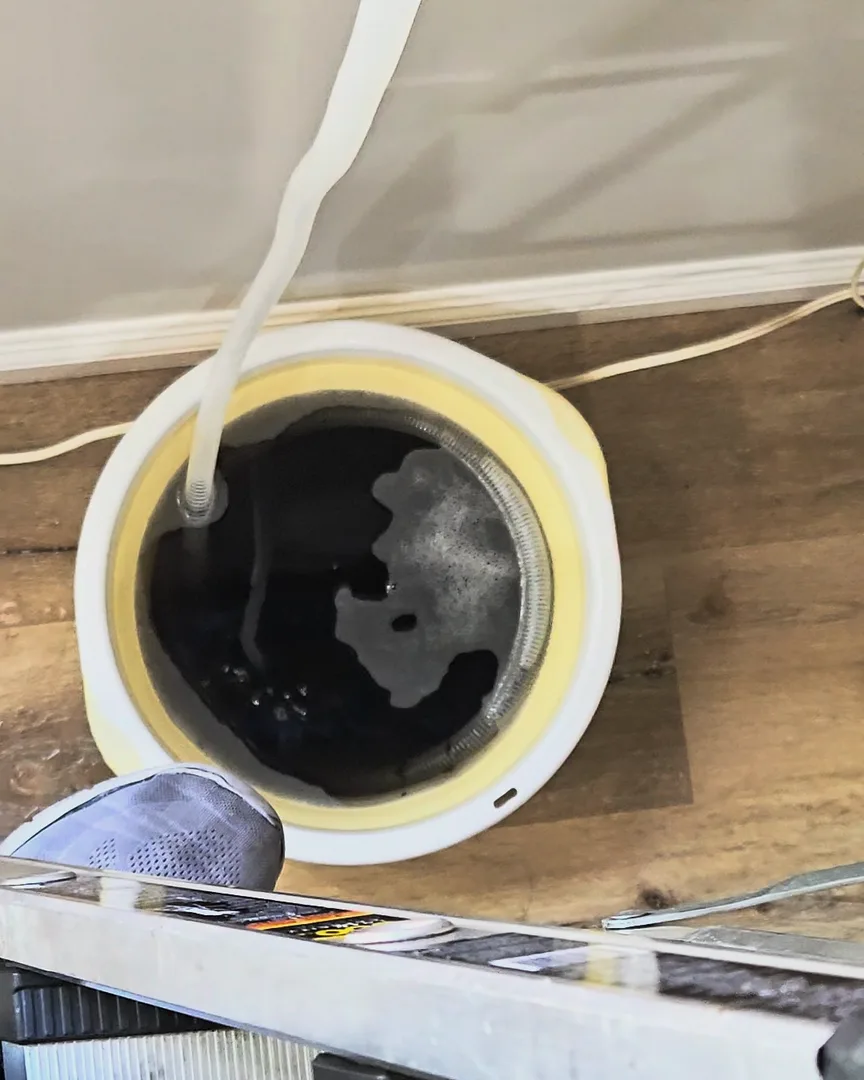
A cleaning bag goes under the head, with a hose from its pocket down to a bucket, so the runoff doesn't go down your wall.
Foam on the coil
Foaming coil cleaner goes over the whole coil and is left to sit.
Rinse
A sprayer rinses the coil until the foam is gone, then the blower wheel from underneath.
Drain pan and line
We clean the pan, flush the condensate line, and check that water actually leaves the head. When a pan tablet is part of the job, it goes in the pan away from the drain hole, as its instructions say.
Filters and covers
The filters, front panel and covers get washed and go back on.
Back together and tested
We start the system and check the airflow and the drain before we leave.
Where the musty smell comes from: mold and moisture
When a mini-split cools, water from the coil drips into the drain pan and runs out through the drain line. The pan stays wet while the unit runs, and air moves right past it, so mold in the pan ends up as a smell in the room.
Dust is a different problem. It settles on the coil and on the blades of the blower wheel and slows the air, and from the front it can look black. Washing the coil, rinsing the wheel and cleaning the drain pan is the core of the visit.
What you can do yourself, and what needs a technician
Filter care is yours, and it's worth doing. The parts behind the filter aren't a DIY job.
You can do this
- Switch the system off at the remote and at the breaker.
- Lift the front panel and slide out the mesh filters.
- Rinse the filters under the tap and let them dry before they go back in.
- Repeat every four to six weeks, more often in a Valley summer.
- Keep plants, leaves and stored things clear of the outdoor unit.
Leave this to a technician
- Washing the coil and blower wheel in place, under a cleaning bag
- Cleaning the drain pan and flushing the condensate line
- Anything that means opening the head next to the control board and wiring
A can of foaming coil cleaner sprayed at the front of the coil isn't the same job: there's no bag to catch the runoff, no rinse, and the blower wheel doesn't get washed.
Signs your mini split needs cleaning
The head smells musty or sour for the first minutes after it starts. It blows weaker than it used to on the same fan setting. Water drips from the bottom of the unit or runs down the wall. You can see dark specks on the louvers, or on the blower wheel if you look up through the outlet with a flashlight. Your electric bill climbs while the rooms feel the same. Any one of these is worth a visit. If the cause turns out to be a failed part rather than dirt, we’ll tell you before doing anything else. If none of them shows up and it’s been two years, book a cleaning anyway.
What we found on a real job
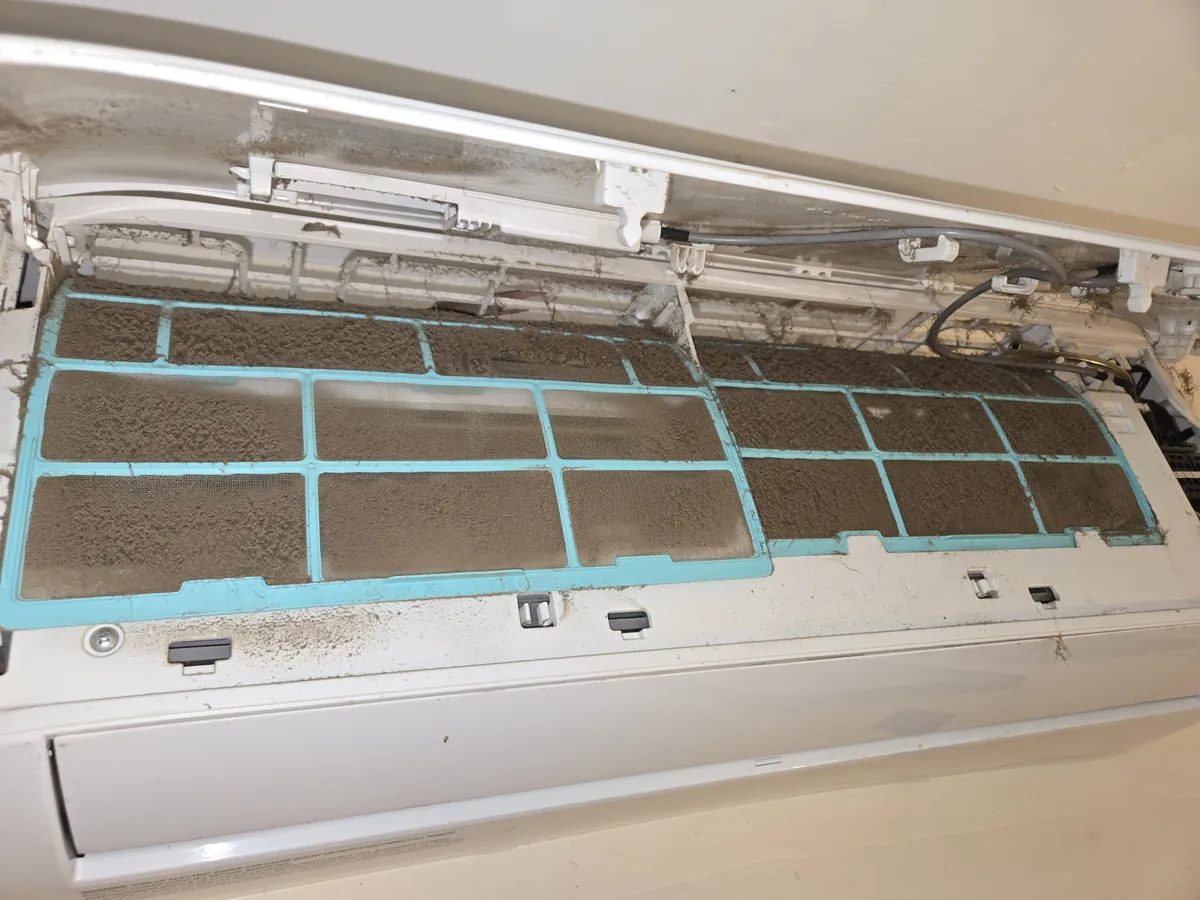
On October 1, 2026, a customer in Granada Hills told us their Daikin wall-mounted mini-split smelled musty. With the front panel off, the black on the blower wheel turned out to be dried dust and dirt, and the mold was in the drain pan. We cleaned both indoor units in place with a cleaning bag, foaming coil cleaner and a sprayer rinse, and the rinse water came out dark. The photos are in the write-up of this musty Daikin case, with mold in the drain pan, and the video is further down this page.
Deep cleaning vs. regular maintenance vs. a tune-up
Regular maintenance has two parts. At home, you rinse the filters every four to six weeks and keep the outdoor unit clear. Every one to two years, a technician does the deep cleaning: the head is opened, the coil and the blower wheel are washed in place, and the drain pan and line get cleaned. Many people call that professional visit a mini-split tune-up. On a ductless system, the cleaning is most of that work, and we finish by running the system and checking airflow and drainage. If it isn’t cooling or heating the way it should, that’s diagnosis: we check refrigerant pressures and read codes as part of mini-split repair. A tune-up on a central system is a different visit, covered on our AC tune-up page.
How the coast and the Valley change the schedule
For most homes, every one to two years. Two parts of LA push toward annual maintenance for different reasons.
Near the beach, the problem is moisture. NOAA notes that the West Coast marine layer, the “May Gray” and “June Gloom” of Southern California, can persist for days or weeks. Damp air and a wet coil are a good setting for mold, which is why we suggest a yearly cleaning for homes in Venice, Marina del Rey and Santa Monica. Homes with pets go on the yearly schedule too.
In the Valley it’s runtime. NOAA’s 1991–2020 normals for the Pierce College station in Woodland Hills show about 115 days a year at 90°F or hotter. A head that runs through a summer like that pulls a lot of air, and a lot of dust, through its filters. Rinse them at the four-week end of the range from July through September. Most mini-splits are heat pumps, so the same coil and wheel also do the heating in winter, and a dirty head costs you in both seasons.
Multi-zone systems: cleaning every indoor head
On a multi-zone system, one outdoor unit feeds two or more indoor heads, and each head collects its own dirt depending on how much it runs. We clean and price every head as its own unit, additional units on the same visit are discounted, and we quote the whole system once we know how many heads it has. We don’t clean ceiling cassette units. Concealed ducted units are cleaned when there’s enough access through the ceiling, an access panel or the attic, and we confirm that when you call.
Mitsubishi, Daikin, Fujitsu, LG and other ductless brands
We clean wall-mounted heads from Mitsubishi (Mr. Slim and M-Series), Daikin, Fujitsu, LG, Samsung, Senville, Pioneer, Gree and Carrier/Toshiba. The covers, wheel mounts and drain pans differ from brand to brand, but the job is the same: coil and wheel washed, drain pan cleaned, drain cleared. Tell us the brand when you book, and send a photo of the indoor unit’s label if you have one.
When cleaning isn’t enough: leaks and error codes
Some problems look like dirt and aren’t. Warm air from a head with a clean coil, ice that comes back after a wash, an error code or a fan that won’t spin can point to low refrigerant from a leak, a failed sensor, a control board or a fan motor. Washing the head doesn’t fix any of those, so we diagnose before recommending anything. If we see signs of one during a cleaning, we’ll show you and quote the repair separately. Diagnosis, refrigerant work and parts are covered on our mini-split repair and service page.
Booking a cleaning
Call (213) 205-2055 or text a photo of each indoor head. Tell us how many heads the system has, what rooms they’re in, and when they were last cleaned, if you know. Before the visit, clear the floor under each head and move anything fragile off the wall below it. We quote the cleaning before we start, and the $85 service call is credited toward the cleaning if you go ahead.
Photos from a real mini-split cleaning job
Common symptoms and what causes them
-
Musty or sour smell when the head starts
Most likely causes:
- Mold in the drain pan, where water from the coil collects
- Water standing in a slow-draining drain pan
-
Weak airflow from the indoor head
Most likely causes:
- Clogged filters
- Blower wheel blades caked with dust and film
- Dirty coil restricting the air
- Low refrigerant icing the coil, or a weak fan motor (a repair, not a cleaning)
-
Water dripping from the indoor unit
Most likely causes:
- Slime or debris blocking the drain pan outlet
- Partly clogged condensate line
- Ice on the coil melting off
- Badly sloped drain line or a failed condensate pump (a repair, not a cleaning)
-
Dark specks on the louvers or blower wheel
Most likely causes:
- Dried dust and dirt stuck to the wheel blades and louvers
- Mold on damp parts inside the head; we check which it is with the front panel off
-
Higher electric bills for the same comfort
Most likely causes:
- Dirty filters and indoor coil making the system run longer
- Dirty outdoor coil shedding heat poorly
Frequently asked questions
How often should a mini split be cleaned?
A professional deep cleaning every one to two years for most homes. Once a year if you live near the beach, in Venice, Marina del Rey or Santa Monica, or if you have pets. Between visits, rinse the filters yourself every four to six weeks. The filters are the part you can do; the wheel and coil need the head opened.
What's the difference between a deep clean and regular mini-split maintenance?
Regular maintenance is the whole routine: filters rinsed at home every four to six weeks, the outdoor unit kept clear, and a professional visit every one to two years. The deep clean is that professional visit: the head is opened, the coil and blower wheel are washed in place under a cleaning bag, the drain pan is cleaned and the line flushed, and we check airflow and drainage before leaving.
How much does mini-split cleaning and maintenance cost in Los Angeles?
Cleaning typically runs $150–$450 per indoor unit, depending on its size and condition: a heavily soiled unit sits higher in that range, one that was cleaned recently sits lower. Additional units cleaned on the same visit are discounted. You get the price before we start. The visit is an $85 service call, credited toward the cleaning if you go ahead, so with the cleaning you pay the cleaning price, not the cleaning plus $85.
Why does my mini split smell musty?
A common source is the drain pan. Water from the coil collects there, the pan stays wet while the system cools, and mold can grow in it. Air moves right past it on its way into the room. Dust on the blower wheel and coil is a separate problem that slows the air. A new filter doesn't reach the pan or the wheel; a cleaning washes the coil and wheel and cleans the pan.
Can cleaning remove mold from a mini-split, and how do I keep it from coming back?
A cleaning washes the parts where it grows: the drain pan, the coil and the blower wheel. It isn't a guarantee that it won't come back. Keep the filters clean and tell us if the unit starts dripping again, since a drain that stops emptying keeps the pan wet. For homes near the coast we suggest the yearly schedule.
Can I clean my mini split myself?
Partly. You can rinse the filters and keep leaves and plants away from the outdoor unit; that's the useful part of DIY. Washing the wheel and coil means opening the head and using water next to its control board and wiring, so leave that part to a technician.
Do you clean every head on a multi-zone system?
Yes. Each indoor head is cleaned separately. Tell us how many heads you have and which rooms they're in so we can quote the whole system.
Do you clean the outdoor unit too?
Yes, when it needs it, as an add-on. The outdoor coil gets a low-pressure rinse, never a pressure washer, because the fins bend. It's priced separately and agreed with you before we do it; it isn't part of the per-indoor-unit cleaning price.
Do you clean ceiling cassette and concealed ducted units?
We don't clean ceiling cassette units. We do clean concealed ducted units when there's enough access through the ceiling, such as an access panel or the attic; we confirm that when you call.
What won't a cleaning fix?
A cleaning won't fix a refrigerant leak, a failed control board, a bad sensor, or a failed fan motor or compressor. If a head still blows warm with a clean coil, ices up again after the wash, or shows an error code, we diagnose the cause before recommending more work.
Google reviews
★★★★★
Had a dishwasher issue recently and, thank God, one of my friends recommended a guy to me, who can fix anything you can plug into an outlet in your kitchen! Fortunately, he was available the next day and came exactly on time. The whole job took about 15 minutes and the price was totally fair and even a bit lower than I expected
★★★★★
Excellent appliance repair professionals—they helped me with my air conditioner at this weather. I definitely recommend them!
★★★★★
Ivan repair person from Epic Star was super. He came and took care of my problem.
Book a mini-split cleaning
Ready to book your mini-split cleaning?
Or text a photo of each indoor head and tell us how many there are.