
A Viking Refrigerator That Wouldn't Hold Its Charge
Another company added refrigerant and left. It leaked back out through the evaporator — how a detector and foam proved the leak, and why the whole coil had to go.
In this guide
This Viking built-in refrigerator quit cooling on the refrigerator side, and it came to us with a history. Another company had already been out, charged the system with refrigerant, and left. The charge leaked straight back out. Nobody had looked for the reason it was low in the first place, so the reason was still there.
Refrigerant doesn’t get used up
A sealed refrigeration system doesn’t consume its charge. The same gas circulates for the life of the machine, so a low charge always means the gas went somewhere. A recharge without a leak search lasts exactly as long as it takes the refrigerant to find that hole again. This Viking had already proven it once: the first company’s charge was gone, and the owner had paid for cold air that left through a leak nobody located.
The detector points, the foam proves
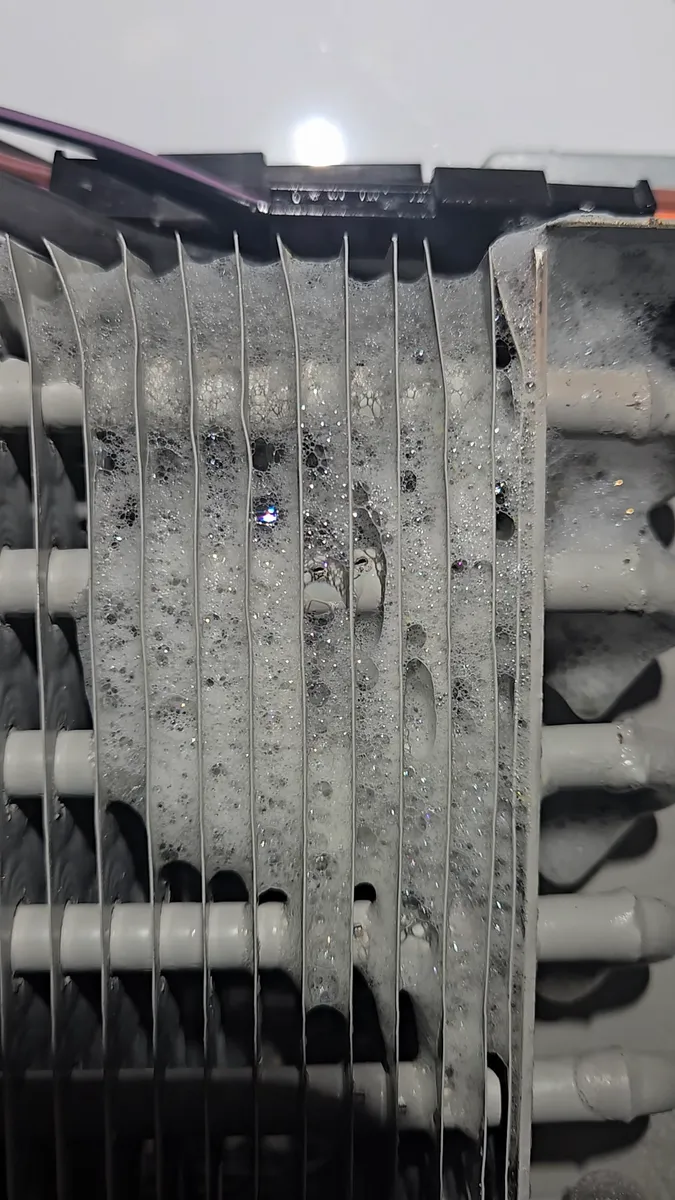
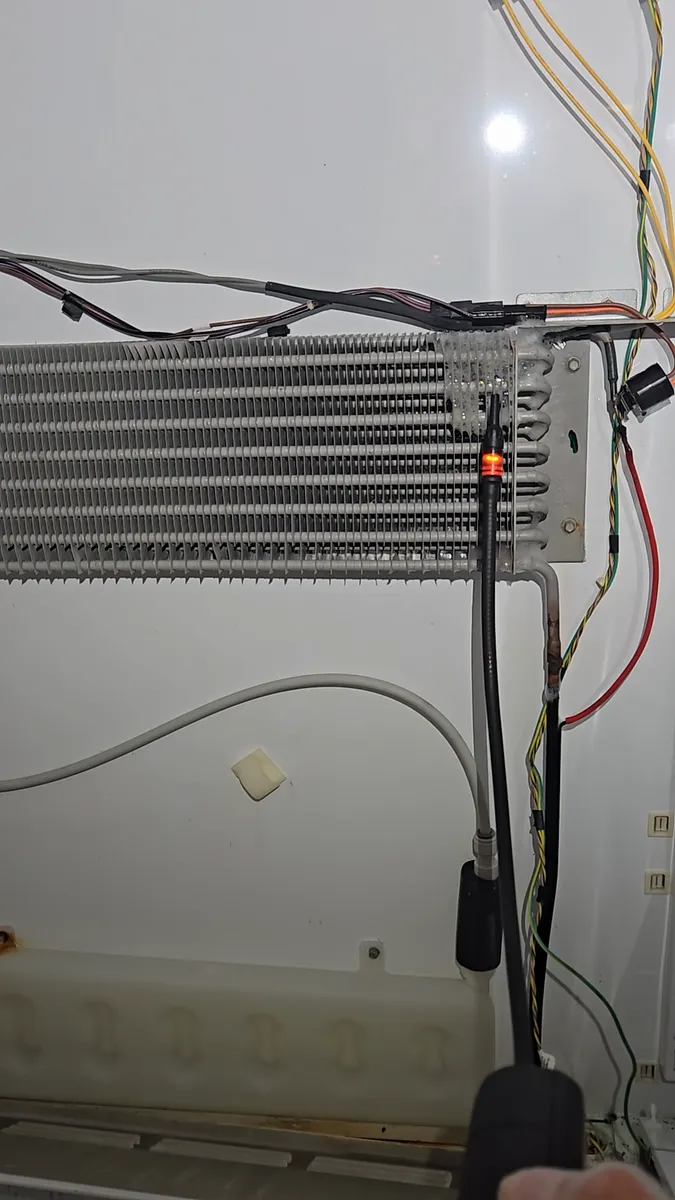
We ran two checks, in order. The electronic leak detector sniffs the air for refrigerant; when it beeps hard in one spot, the system is losing gas right there. On this fridge it lit up at the evaporator. Then came the leak-detect foam. Sprayed over the coil, it turns escaping gas into something you can watch: bubbles pushing up through the soap. The detector narrows the search, and the foam settles the question.
A coil leaking across its whole face
Bubbles came up along the whole face of the evaporator. A leak at a single braze point can sometimes be repaired, but a coil bleeding refrigerant from that many places gets replaced, because patching one hole leaves the rest still open. The whole evaporator had to come out.
Then the part hunt. Only one supplier had this coil. It’s a small piece, and it cost the same money as an evaporator that cools an entire house. We had it air-freighted, and it arrived in two days.
Flush, braze, drier, vacuum
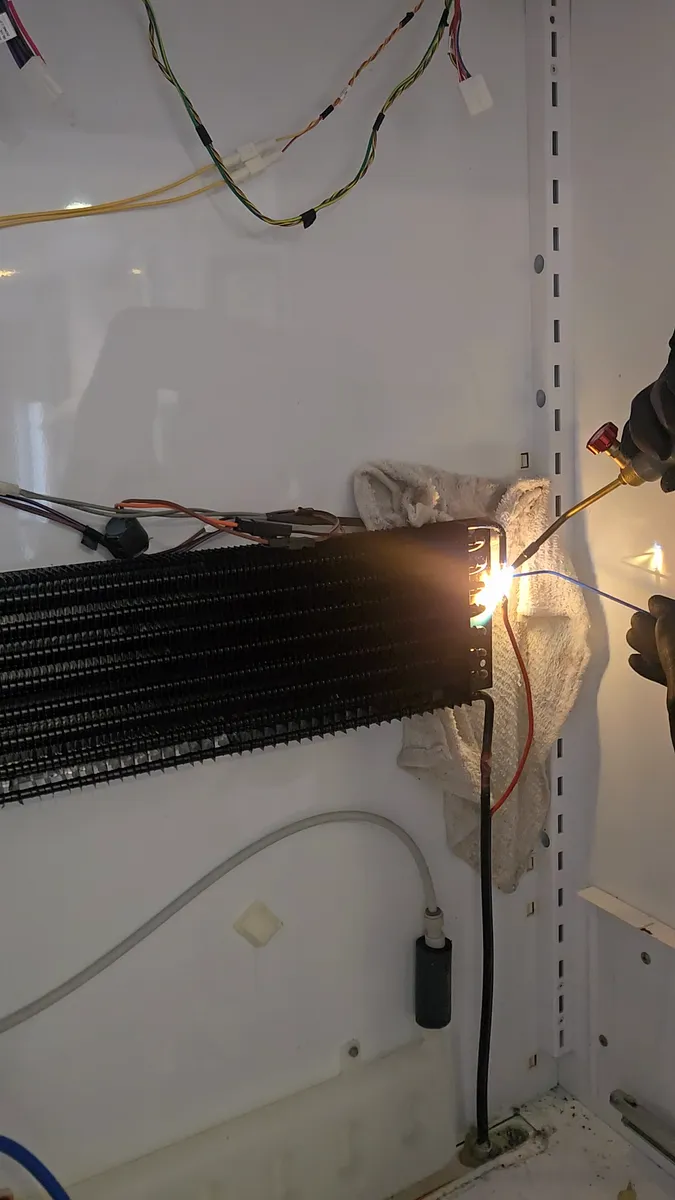
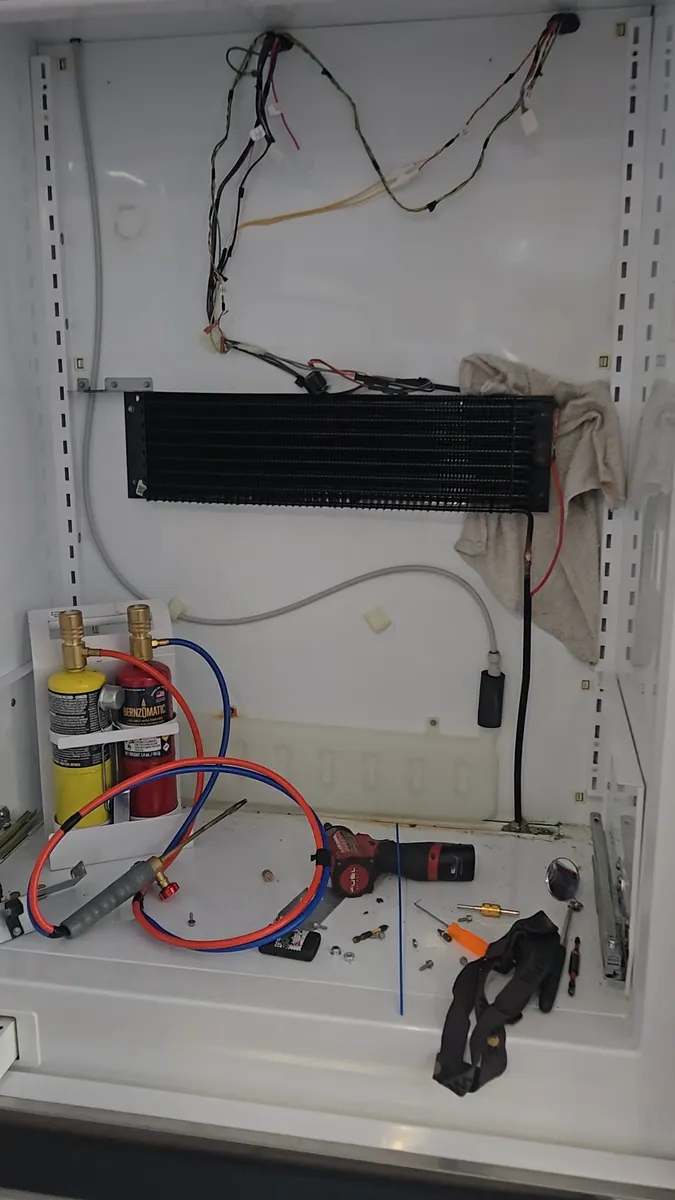
Order matters in a sealed-system rebuild. I flushed the capillary line before anything went back together, so nothing stayed behind in the narrowest passage of the system. The new evaporator went in, I brazed the capillary line on, and a fresh filter drier went with it. Then pressure test and vacuum, more than once. I don’t put refrigerant in a system until it proves it holds.
From 63 degrees to 50 and dropping
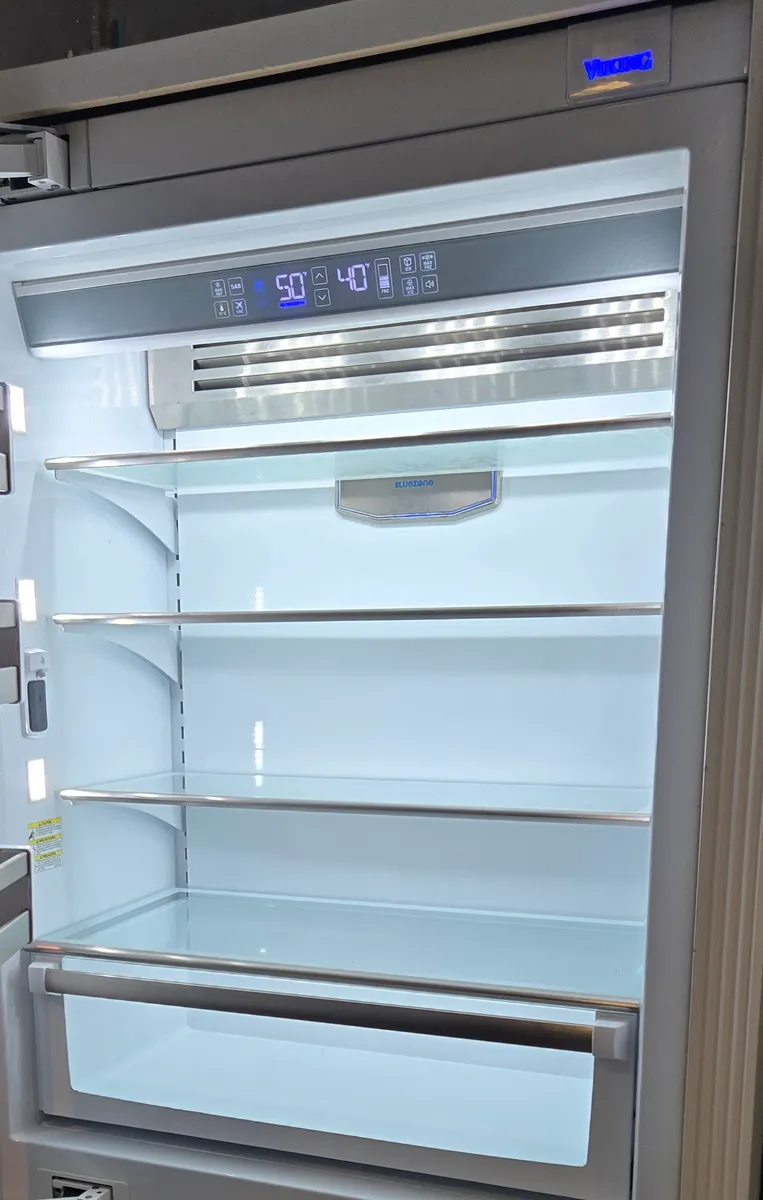
The box was sitting at 63 °F when I arrived. By the last photo the display read 50 on the refrigerator side, still dropping, and 40 in the freezer. The closing shot catches the pull-down in progress rather than at the set point. The charge is in, the system held through every test, and the coil that was blowing bubbles is gone.
Refrigerator trouble at your place
We handle sealed-system work on refrigerators across Los Angeles, including built-in and panel-ready units like this Viking, alongside refrigerator repair and freezer repair. If your fridge is warm, not cooling, or has been recharged before and lost it again — the pattern we also saw on a Sub-Zero sealed system — we look for the cause before we add anything. Ask about available appointments; timing depends on scheduling and parts. Our work carries 30-day labor and 90-day parts warranties. Call or text (213) 205-2055, or book online.
FAQ
Why does a refrigerator lose refrigerant?
A refrigerator's sealed system doesn't consume refrigerant; the same charge circulates for the life of the machine. When the level is low, the gas escaped through a leak. On this Viking built-in the leak was in the evaporator, and leak-detect foam showed bubbles along its whole face.
Is adding freon to a warm refrigerator a real repair?
Only when the leak is found and fixed first. This system had already been charged once by another company, and that charge leaked straight back out because the hole was still there. A recharge without a leak search lasts as long as it takes the gas to escape again, and the owner pays twice.
How do you find a refrigerant leak in a refrigerator?
With two checks that confirm each other. An electronic leak detector sniffs the air and beeps hard where refrigerant is escaping. Then leak-detect foam goes over the suspect area: gas pushing through a hole blows bubbles up through the soap, so you can see exactly where the system is losing its charge.
Can a leaking evaporator coil be patched?
A leak at a single joint can sometimes be brazed. This coil bubbled along its whole face, and a coil leaking in that many places gets replaced, because patching one hole leaves the rest still open.
Why replace the filter drier and pull a vacuum after an evaporator swap?
The filter drier catches moisture and debris circulating in the sealed system, and opening the system for a coil swap lets air and moisture in, so a fresh drier went in with the new evaporator. After the brazing, this system got a pressure test and a vacuum, more than once. Refrigerant only goes in once the system proves it holds.
Do you repair Viking built-in refrigerators in Los Angeles?
Yes — sealed-system diagnosis, evaporator replacement, and other repairs on Viking and similar built-in, panel-ready units across Los Angeles. Ask about available appointments; timing depends on scheduling and parts. Work includes a 30-day labor and 90-day parts warranty.
Got an appliance that needs fixing? We cover LA and the Valley.
Call (213) 205-2055 or text a photo of your appliance.