
Three faults in one condenser, one call
The second compressor this unit had eaten, and the valve that did it was still sitting in the system.
In this guide
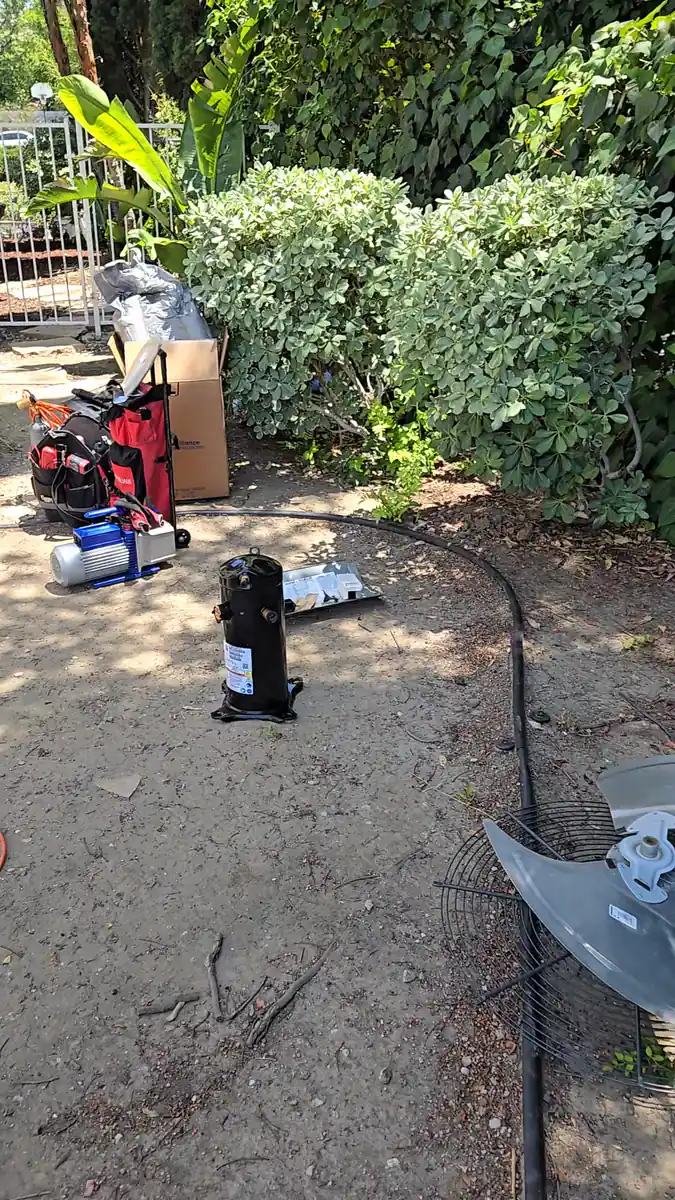
Hot day, residential backyard, and the job starts with the old compressor lying in the dirt next to the fan blade. Burned out. On its own that’s an ordinary call.
What makes it worth telling is that this condenser had already been through one.
Two compressors, one cause
A compressor is a pump. Pumps don’t fail twice in the same system by coincidence, so something else in there was doing the killing. Here it was the thermal expansion valve.
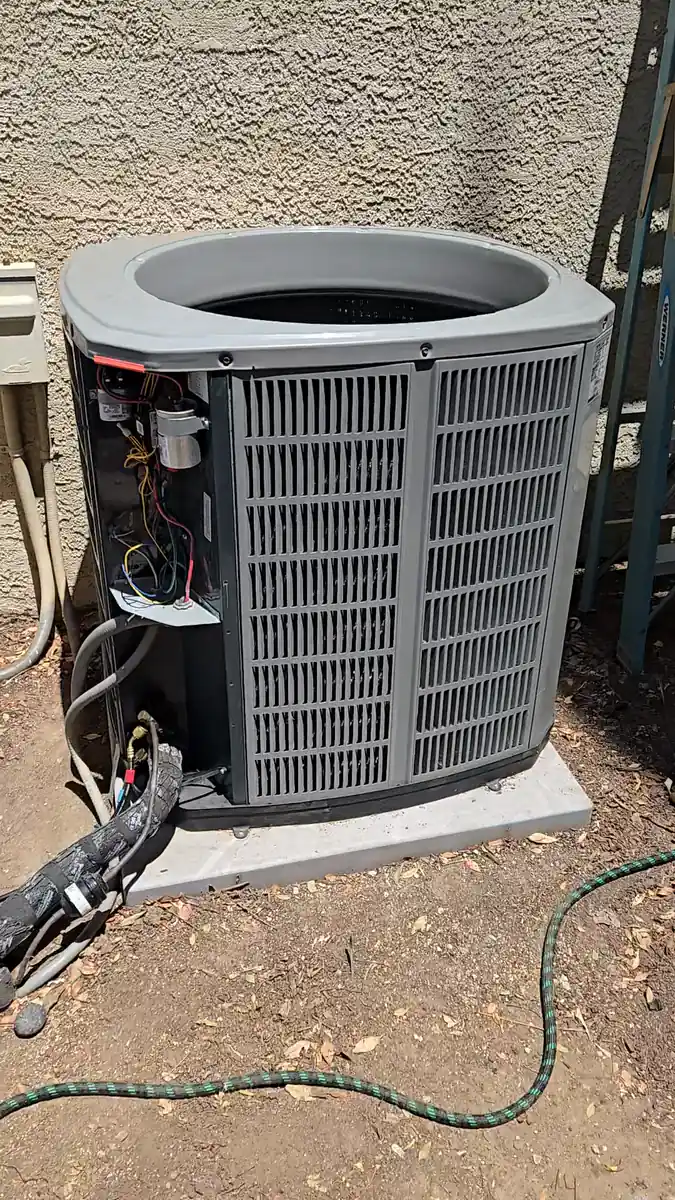
The TXV meters liquid refrigerant into the evaporator, opening and closing as the load changes so the coil gets what it needs and nothing more. Seize it, and that flow gets choked off. The compressor ends up pushing against a restriction while the returning gas it depends on for cooling drops away. Run it that way and the windings cook.
The compressor is what fails, so the compressor is what gets blamed. Meanwhile the valve sits there, still stuck, waiting on the next one.
The restriction didn’t show until the charge went in
The order matters here.
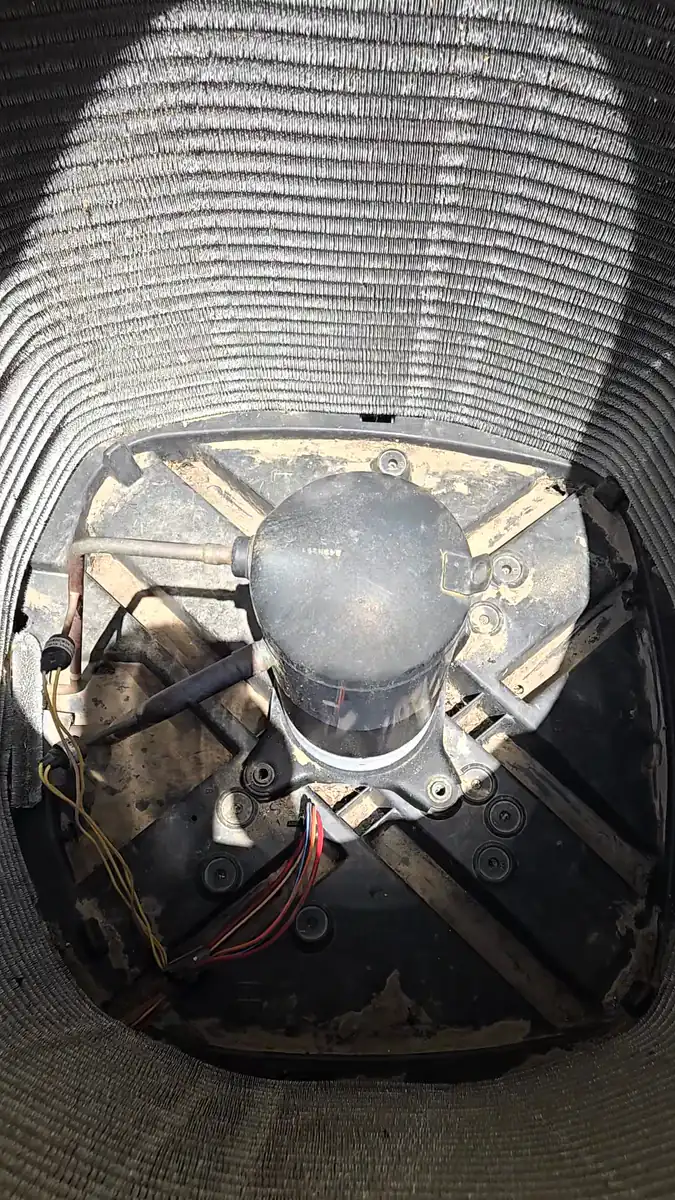
The new compressor went in first, seated down in the coil where you can see it in the video. Then the system got charged. Only once refrigerant was actually moving did the restriction announce itself.
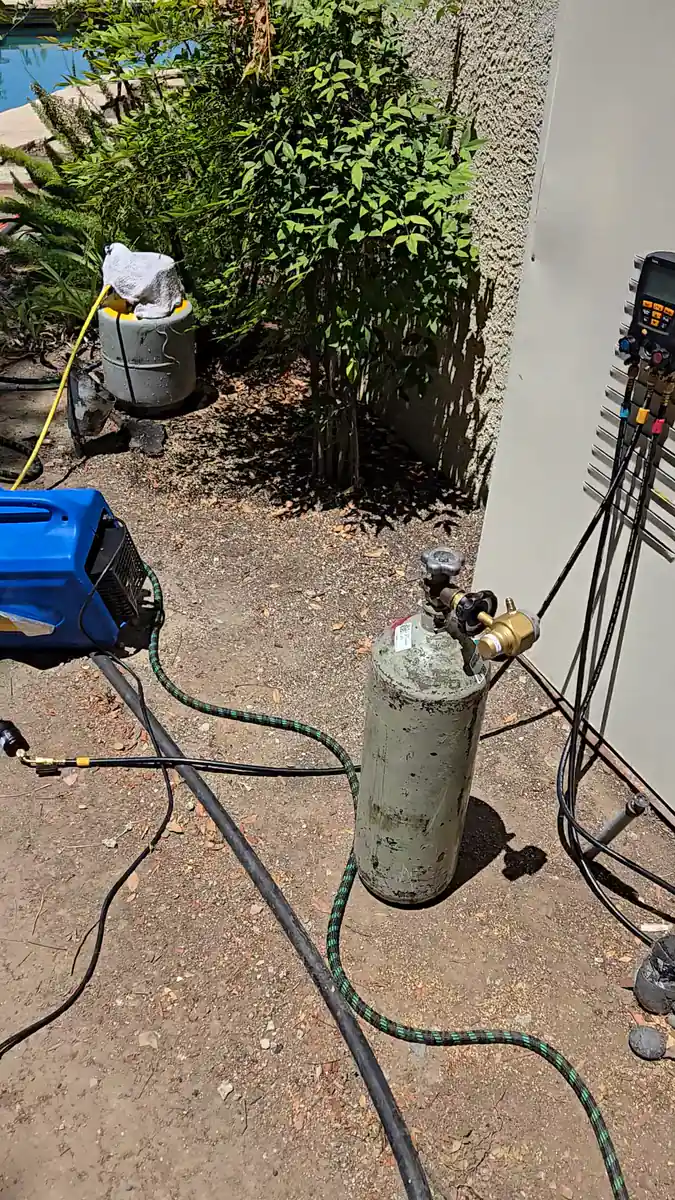
That catches people out. A seized valve looks like nothing at all on an empty system. Give it something to meter and it tells on itself right away. This one was seized, so it came out and a new valve went in.
Then the contactor
Back into the electrical compartment after the valve, and the contactor was stuck.
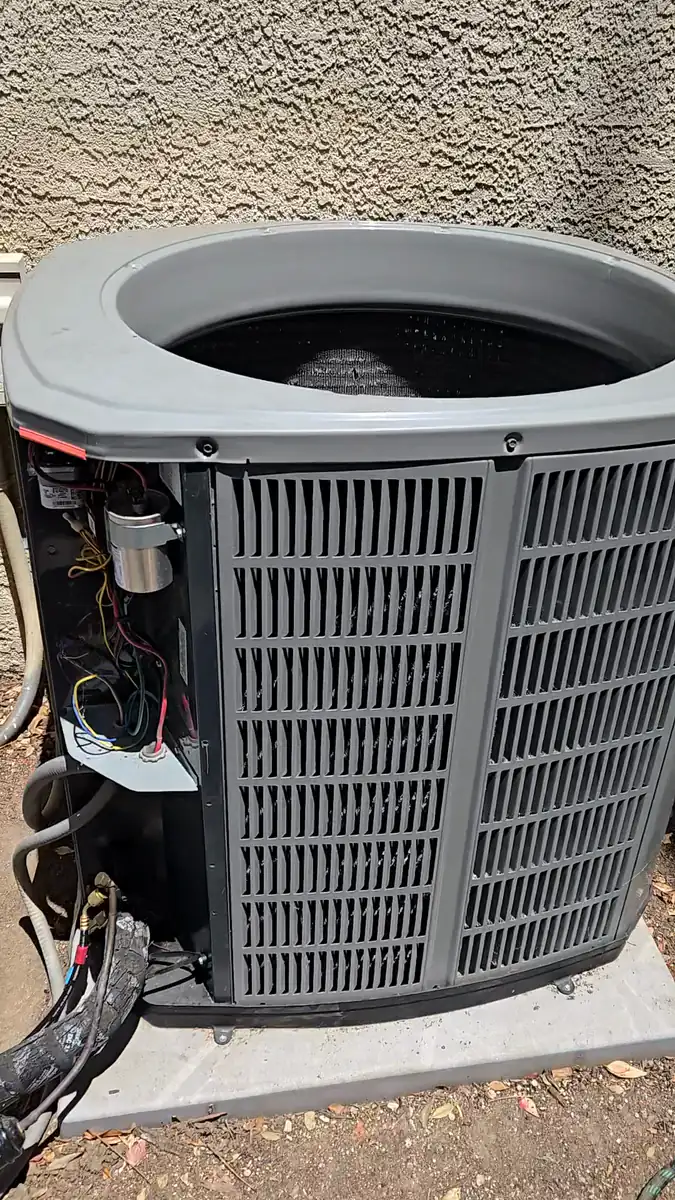
A contactor is the relay that throws power to the compressor and the outdoor fan when the thermostat calls for cooling. Its contacts carry real current and they arc every time they close, which makes them a wear part. When one hangs up, the unit either won’t start or won’t shut off, depending on which way it’s stuck.
It’s a small part, and exactly the sort of thing that gets skipped past when there’s a compressor on the invoice. Then the same unit turns into a callback.
Is the make of the unit the problem?
No. A TXV and a contactor sit in split systems from every brand out there, and both are parts that wear or seize on their own schedule. This was one condenser with one bad valve in it. The name on the cabinet counts for nothing in a diagnosis like this, and the same symptoms would have led me to the same place on anything else standing in that yard.
What I’d check if your compressor failed twice
If a compressor has been replaced in your system and the replacement has failed too, whatever killed the first one is probably still in there. It might be the TXV, like this one. Could be a restriction somewhere else in the line, or a condenser fan that isn’t moving air.
The compressor is the part that shows the damage. It usually isn’t the part that caused it.
On this unit the valve was the cause both times. Changing it is what stops a third compressor from going in.
AC compressor and valve work across Los Angeles
We handle compressor replacements, sealed-system diagnosis and the electrical faults that come with them, on residential and commercial air conditioning — Westside, Hollywood and the San Fernando Valley. CA BEAR registered (#A 50636), EPA 608 Universal certified, $1M insured, with a 30-day labor and 90-day parts warranty.
If your AC quit and you’ve already been told it’s the compressor, call before you buy the compressor. (213) 205-2055 — call or text to ask about available appointments.
FAQ
My AC compressor was replaced and it failed again. What went wrong?
Something in the system killed the first one, and if nobody found it, it's still in there to kill the second. On this American Standard condenser it was the thermal expansion valve, seized shut. A compressor fighting a restriction while it's starved of the returning refrigerant that cools it will cook its own windings, and it'll do that to a brand new compressor just as happily as it did to the old one. Before you pay for another compressor, get the valve and the rest of the line checked.
Can a stuck TXV really destroy a compressor?
Yes. It's one of the failures I see sitting behind a burned-out compressor. The valve's job is to meter liquid refrigerant into the evaporator. When it seizes, the compressor pushes against a restriction on one side while the flow of cool gas that normally comes back to it drops away. That returning gas is what carries heat away from the motor windings, so as it thins out the compressor starts baking itself.
Should the TXV be replaced whenever a compressor is replaced?
Not automatically, but it has to be checked. A valve that's metering properly is no reason to spend the customer's money. A compressor that burned out and nobody can say why is a different situation, because a restriction at the valve is a cause that survives the repair and takes the new part out too. On this job the restriction only showed up once the new compressor was in and the system was charged.
What does a stuck contactor do?
The contactor is the relay that sends power to the compressor and the outdoor fan when the thermostat calls for cooling. Its contacts arc every time they close, so they wear. Stuck closed, the outdoor unit keeps running when it shouldn't. Hung up the other way, it won't start at all. It's a small part, and on this condenser it was the third thing wrong.
Do TXV and contactor failures happen on other brands too?
Yes. A thermal expansion valve and a contactor sit in split systems from every manufacturer, and both are parts that can wear or seize on their own. Nothing about this repair was specific to the make on the cabinet. It was one unit with one bad valve in it, and the same symptoms would have led me to the same place on anything else standing in that yard.
Why wasn't the restriction found before the new compressor went in?
A seized valve doesn't show itself on a system with no refrigerant moving through it. You need flow to see a restriction, and you don't get flow until the compressor is in and the charge is back. That's why the order on this job ran compressor first, then charge, then the valve.
Do you replace AC compressors in Los Angeles?
Yes, residential and commercial, across the Westside, Hollywood and the San Fernando Valley. We do the sealed-system work that goes with it, valve replacement and evacuation included, plus the electrical side. CA BEAR registered (#A 50636), EPA 608 Universal certified and $1M insured. Call or text (213) 205-2055.
AC, heater or mini-split acting up? We cover LA and the Valley.
Call (213) 205-2055 or text a photo of the unit and its model sticker.